Adsense

Thursday, 4 August 2016

Rose - A Harry Potter Fanfic; Chapter One

[This is a work of ‘fanfiction’, essentially a tribute to the world created by JK Rowling. No infringement of copyright is intended, and neither is any commercial exploitation.]


Chapter 1

Voices

Rose Weasley normally liked Hogsmeade trips.

“Normally” being the operative word here, because today she was finding herself – to put it mildly – bored to death.

She was not the sort of girl who had a lot of friends. Rose had the sort of easy-going personality that meant she rarely rubbed anyone the wrong way, but apart from Albus Potter (who was also her cousin), Martin Lovegood and Elk Moose, she didn’t think there was anyone at Hogwarts she was particularly close to.

And all the three boys had ditched her today. Albus had managed to get himself a detention with Professor Flitwick, Martin Lovegood was down with a cold (for the fifth time that year) and Elk Moose, who was trying out for the Hogwarts Wizard Chess team, insisted he needed to practice his game against Nearly Headless Nick, the all-England Ghost Champion.

She kicked moodily at a Butterbeer cork that was lying on the road and pulled her cloak tighter around herself as she made her way from the Hogsmeade branch of Weasleys' Wizard Wheezes (where she had dropped by to say hello to her Uncle George) towards the Shrieking Shack. It was a quiet road – few people voluntarily went in the direction of the Shack even in these peaceful times – and that suited her frame of mind rather well.

She scowled as a group of Hogwarts students – third year, she guessed – passed her going in the opposite direction. She did not know them, but it was one of those days when Rose felt like scowling at people on principle.

She walked on, with no particular idea of where she wanted to go, which she thought faintly ironic because she had no particular idea where she wanted to go in her life as well. She sighed as a gust of winter wind blew open her cloak again, and pulled it closer around herself, wondering why she even bothered going to Hogsmeade in the first place. Even if she thought about it, she never came up with a better answer than “Because I can”. She had the permission slip to go to Hogsmeade, so she went. At least it gave her some respite from the chattering first and second-years who took over the common room with the older students out of the way.

Her Aunt Ginny had told her she ‘brooded’ too much, and Rose thought that was not entirely untrue. She did tend to think too much about everything, except her studies, which meant she languished pretty much near the bottom of every class. That made life even harder, somehow. All the teachers had been ecstatic to see her when she had first made it to Hogwarts, close on five years earlier. She remembered the day well. Travelling in a compartment on the Hogwarts Express with the Potter brothers, being ferried to the castle in boats over the Great Lake and taken to the Entrance Hall. Then the sorting – the Sorting Hat had put her in Gryffindor almost instantaneously (as her father had predicted it would) and she had walked over to the first table on the left to loud cheering, where she joined the Potters and various Weasley cousins.

That was pretty much the high point of my school career, thought Rose grimly as she took a path that forked off from the road towards a little copse where she liked to sit and do her sketches. Rose was quite a gifted artist, drawing praise from Professor Longbottom (or ‘Uncle Neville’ as she always thought of him) who had compared her sketches favourably with the ones his friend Dean Thomas, now one of the most famous portrait artists in Europe used to do at her age. True, it seemed to be the only thing she was gifted at, which was the beginning of her trouble. For, as she found out in her first week at Hogwarts, she was not just Rose Weasley. She was Hermione Granger’s daughter, and that took some living up to.

Her mother was the most amazing woman Rose had ever known. She was also the most intimidating. Passionate, brilliant and ambitious, Hermione Granger-Weasley was already the youngest member of the Wizengamot, headed the Department for Co-operation with Magical Creatures and was seen as someone who would go on to even greater deeds. Which is all very well, groaned Rose as she found a tree-stump where she deposited a few pencils and rolled-up pieces of parchments, except that everyone expects me to be her clone. And I’m not – I’m not Hermione Granger-Weasley.

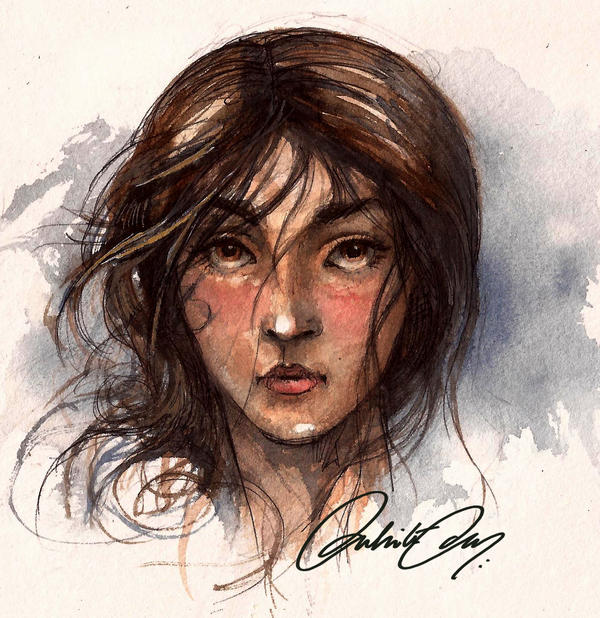
Every teacher expected her to top their class “just like your mother used to”. They had all unfailingly said as much in the first class she had of each subject, and she had, just as unfailingly, managed to disappoint them. I suppose I do all right in Herbology and Care of Magical Creatures, thought Rose, unrolling a sketch she had made the previous week. She gazed at it speculatively for a moment. It was a sketch of a snowball fight that she had witnessed from the window of her dormitory in Gryffindor Tower. She made a few minor changes, wielding her pencil with the delicacy of a paintbrush. A few stray strands of brown hair fell over her forehead, which she brushed away. Completely uncontrollable hair had to be the one thing I inherited from her, she thought irritably. She looked more like her Muggle Grandma Jane than either of her parents, and was grateful for that, at least. Grandma Jane had been rather good-looking in her youth and even now was a handsome woman. Rose knew that her mother and grandmother did not get along as well as they should, but that had never affected the relations between her and the sprightly old woman.

Rose glanced up. She thought she heard voices – and not being the sort of person who generally heard voices in her head, she concluded that there were people around. She pushed herself to her feet and started putting away her pencils. She hated people seeing her work before it was finished. Who the hell could it be? I thought I was the only person who came to this place.

She had just about finished putting her parchments back into her cloak when she realised the voices were growing fainter, not louder. So someone was going past the copse, outside the village, towards the edge of the Forbidden Forest. Idle curiosity drove her to walk towards the sounds, wondering who it was going towards the Forest on this cold January evening. She had only walked a few minutes when she saw two figures ahead of her, one man and one woman, both dressed in warm woollen coats and fur caps. The man definitely looked familiar. She followed at a safe distance, though the snow on the ground meant that her footsteps were muffled enough to prevent her from being heard.

“Yes, it has been a while, hasn’t it,” she heard the man say. She allowed herself a little gasp – she knew that voice only too well.

What’s Uncle Neville doing here?

The duo walked slowly, making their way around the small birch trees that formed the periphery of the Forest. Though she couldn’t make out who was accompanying the Professor, she guessed it was a woman from the slim figure and the flashes of silky black hair that were visible under the thick cap.

Her curiosity, a powerful beast at the best of times, was piqued. Uncle Neville’s wife Hannah, she knew fully well, was a blonde. So what was he doing walking around in the snow with a strange black-haired woman?

“So it has…I don’t think I’ve seen you or Harry or anyone from the D.A. in more than three years now,” said Neville’s companion, her voice confirming Rose’s suspicion that she was a woman.

“Well, it’s been a peaceful few years -” shrugged Neville, “ - which is all the better for the world in general.”

“So what’s changed now?”

“I could tell you what I know, but it isn’t much. Better to wait until we reach the meeting point.”

“And who are we meeting exactly?”

“You’ll find out,” said Neville in an amused voice.

“You’re not going to tell me no matter what I say, are you?” said the woman.

“No, I’m not, but trust me, it will be worth it.”

They walked on a while longer in silence, Rose still following behind. Years of sneaking around the school corridors at night had taught her the art of moving without being heard. Of course, their nightly excursions usually ended with Elk erupting into an enormous sneeze which meant they had to scurry for the closest means of cover while Filch and Mrs. Norris marched up and down the hallways looking for the perpetrators of the villainy.

“So how’s things at the school then, Neville? Harry and Hermione’s kids must be at Hogwarts now, mustn’t they?”

“Them and everyone else’s,” agreed Neville. “Except people like us, of course.”

“At least you ARE married,” said the woman with a light, musical laugh, “and not a basket case like me!”

“Oh come on, Parvati, you’re anything but a basket case. You just chose a different lifestyle.”

“We’ve been thinking of adopting though,” said Parvati, in a more serious tone, “so that’s something to look forward to. Probably after I retire from the ramp.”

They continued to walk for a few minutes until they arrived at a small hillock. She had been too engrossed to notice where they were going, but as the pair ahead of her began climbing towards what looked like the opening to a cave, she realised that she was not far from the legendary cave where Sirius Black, at the time a notorious fugitive had hidden while her Uncle Harry had been a student at Hogwarts.

Next Chapter


Tuesday, 2 August 2016

Fanfiction and me – a selection from the autobiography of the Slacker.


Why Fanfic?

Why not fanfic? I’ve heard it being denigrated, of course, or called ‘not real writing’, but that is an opinion that’s plain wrong. Fanfiction is writing, for the simple fact that it is words on paper. Now there’s degrees within Fanfic, of course. There’s work that is very original and work that is - well, not. There are fanfics of such brilliance that they make one wonder if the original might not have benefited from the treatment, and then there is ‘My Immortal’.

The point I am trying to make is that as a creative outlet, Fanfic is as legitimate a form as any other.

My personal journey into the world probably stems to my very early forays into writing, when my age was in single digits and I scrawled block letters into unused diaries trying to write about the Famous Five and the Hardy Boys, before moving on to my version of The Count of Monte Cristo where {SPOILER ALERT] Edmund Dantes dies a horrible death before driving M de Villefort’s wife to suicide. Naturally, all that was forgotten in the years that followed, and I pretty much put aside my pen as I went through college. When I did pick it up again (though it was a desktop keyboard by then) I was writing original stories – the Elver series that some of you have been kind enough to read. For those of you who haven’t, a couple of the stories written at the time are available here.

Then I got a job, and that’s where Fanfiction re-entered my life in a big way.

It went something like this - as a young Management Trainee, I was chucked into the world of finance (a week before the contracted joining date, as I shall curse to my dying day) into a team that was in flux. The international business division was being re-organised, nobody knew what they would be handling a month hence, and as such, were not particularly interested in finding work for a fresh-faced young fellow who, to be fair, was not actually pushing to be given something to do either.


Not actually a photo of the Slacker. My socks are less flashy.

So I had what can best be described as ‘vacant’ time. Time to sit at a desk and do nothing. I’d have liked to bring a novel to the office and peruse it, but even I was not thick enough to think I could get away with that without doing serious long-term damage to my career. Maybe if I could bring a management guru’s book to read, yes, but that was never going to happen.

So I was left with the alternative of peering into a computer screen and trying to find entertainment there, on a network that blocked all forms of social media.

That’s when fanfic came to my rescue. Those sites were not blocked. Schnoogle, FF.net, mugglenet – all displayed their wares, and I spent many a blissful hour reading the works hosted there. That there would be a slant towards Harry Potter was not surprising, the last book of the series was yet to come out, and for many people like me, fanfic was a way to seek an alternate ending, a resolution, to questions we still had. Looking back on it, as much as I enjoyed reading Harry Potter and the Deathly Hallows, I must say that I can think of at least a couple of Fanfics that did a more convincing and satisfying job of closing the series.

Well, my idyll at the office did not last long, and pretty soon I was festooned in work but Fanfic remained my guilty pleasure, it was where I went to if I snatched a free half-hour at work. But two – maybe three – years into my life as corporate slave, I realised that my own writing had gone so completely on the back-burner that its prospects of ever coming to fruition were weaker than those of Birbal’s proverbial khichdi being cooked.

And yet, writing is a skill, and a skill needs to be practised. Or so I thought. Thinking up original content was virtually impossible at the end of a twelve-hour workday. But I did have an idea for a story that was essentially an extension of Rowling’s Harry Potter Universe. I wanted to explore the next-generation, and avoid the mistakes that other fanfic authors had made by caricaturising the children. If I could bring something of my own writing, my own style and characterisation to the HP universe, I thought I’d be doing a pretty good job of honing my own skills, while crafting a tale I hoped would be engaging.


I named it ‘The Name of the Rose’, which was stupid, in hindsight, but what did I know, right? I had a plot in mind, even if, like all pantsers, it was vague as to the specifics. But I had my characters well-mapped out in my head. They were real to me – Rose Weasley, Scorpius Malfoy, Albus Potter and even the elements from Indian mythology that I was trying to weave into it. For this was rapidly becoming my story.

There was also the Neria Fanfic, based off Dragon Age: Origins, an RPG that still stands up both graphically and in terms of gameplay and which I enjoyed re-imagining as the story of a slutty mage.


Flash forward to today.

While I am writing more original content now, what with Cats and other forms of fiction I still have neither forgotten, nor am I ashamed of, my foray into the world of Fanfiction. After all, if JK Rowling can put her name to ‘Harry Potter and the Cursed Child’, which is essentially a fanfic, even if a good one, I’m pretty sure mine isn’t too bad either ;)

I shall be posting the opening Chapters from my Harry Potter Fanfic on this blog over the course of the next few days, and depending on the response, might put up the whole thing.


Happy Reading, and all that sort of thing.

Saturday, 30 July 2016

Wuthering Heights, once again


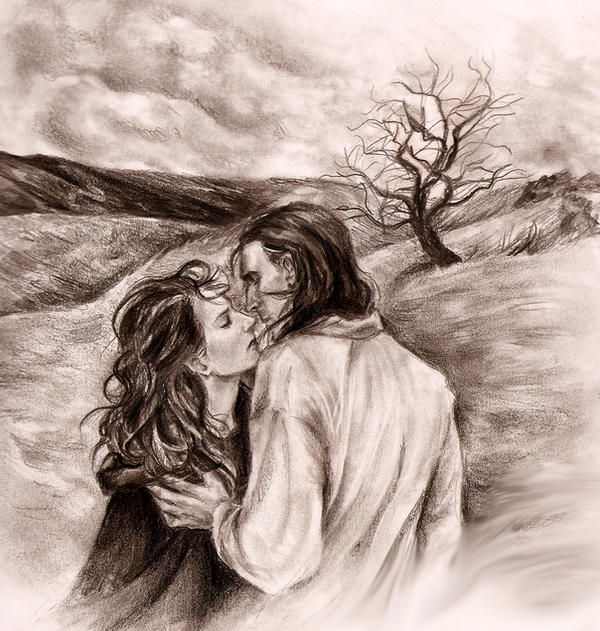
A hundred and ninety-eight years ago today, Emily Bronte was born. She would die not long after – just a few months past her 30th birthday. But she gave the world – and me – something that we should be eternally grateful for. The novel Wuthering Heights

In a world which celebrates material achievements and makes Gods of the rich for no other reason than their ability to extract money from the earth, atmosphere or from human beings, it might not be a bad idea to remind ourselves that a parson’s daughter from a remote village in northern England, who only ever wrote one book, achieved more lasting fame than John Jacob Astor. 

Who is Astor, you ask? Oh, just the richest man in the world in the year 1848, the year the parson’s daughter died.

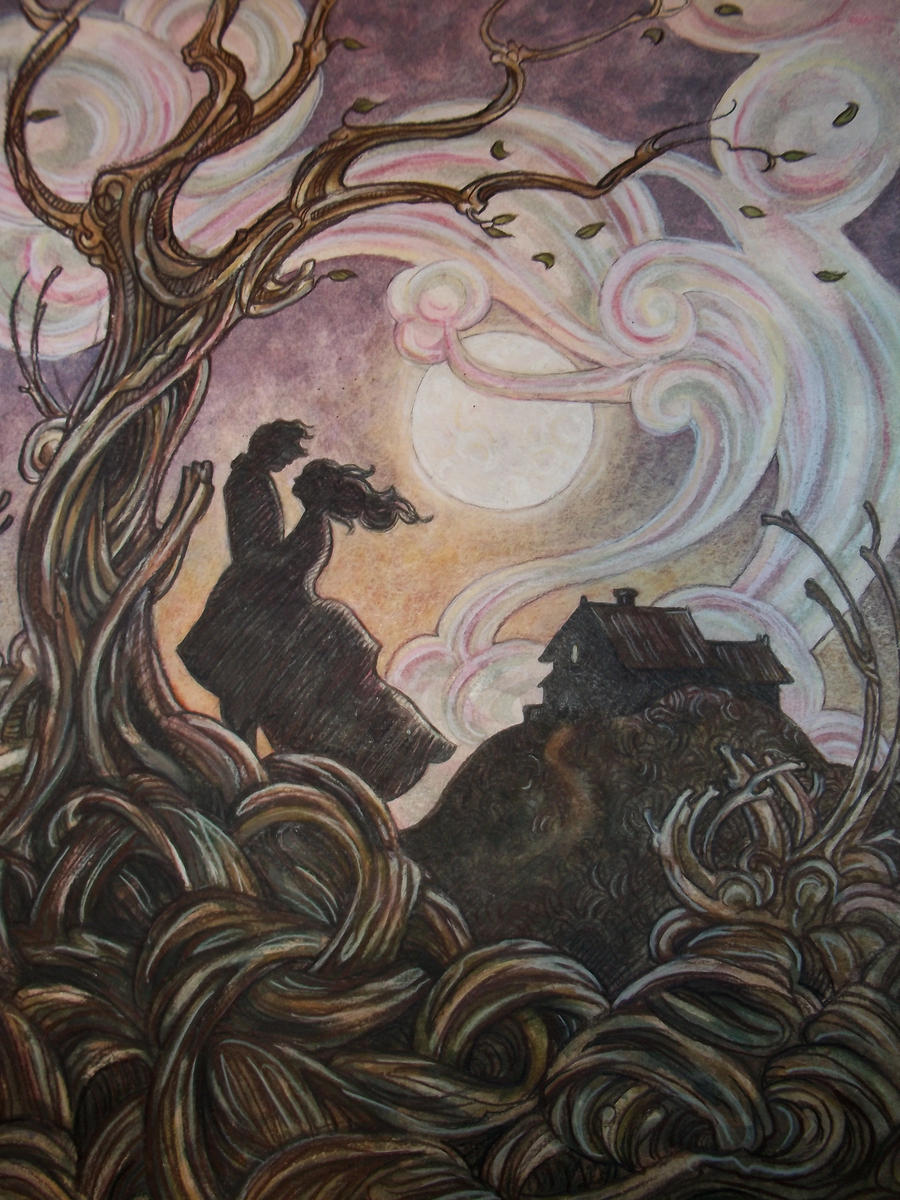
I wrote this as a tribute to the book and the novelist on this day last year.


“Let me in.”

It was a disembodied, child-like voice. Definitely a girl's though. Wasn’t the first time I was hearing it either. In fact, she had been making her plaintive plea for a while now. How long had it been – how long had I ignored her?

“Nine years,” she said, anticipating my thoughts, as she often did. “Nine years you've left me out in the cold.”

“Nine? Not that many, surely,” I smiled weakly. “And you haven't been out in the cold or...”

“A book unread is a book out in the cold, Jormund,” she laughed her saucy laugh.

“Well nine years…I do feel…surely you’re mistaken.” I said. She was mistaken, wasn’t she? I remembered her face, her form, her words as clearly as though I had seen her yesterday.

“I know you better than you know yourself, Jormund. Do you remember why you sought me out, then? Wasn't it for a grade? A grade to shore up your sinking – what do you call it? A GPA? You wrote about me and got the grade you wanted. Your first year in University.”

I had heard enough. I opened the window.

“Come in! Come in!” I sobbed. “Cathy, do come. Oh, do—once more!”

(c) Duhinta Das

I can't recall how often I've read Wuthering Heights. Deuce take it, I can’t even recall how old I was when I first read it. It was a book that had belonged to my uncle, with the glowing golden stamp of the University of Mumbai on it, already disintegrating in my hands, the pages yellowed with age.

Too young to understand most of the words, too impatient to savour the flavour of Yorkshire's moors that Bronte brought so vividly to life, too stupid to understand the themes it brought forth, I nonetheless devoured it impatiently and when it was over, I was conscious of a feeling of loss, as if this was a book I could read for ever, that I never wanted to end.

Well, I did read it again. And again. And again. Each time, I laughed with Catherine and Heathcliff as they ran through the moors, I cried for Isabella Linton as she sped to her foolish doom, I reflected sadly with Nelly Dean on Hindley Earnshaw's wasted life, I felt sorry for Edgar Linton, ever to enjoy only a pale reflection of the all-consuming passion his wife held for her lover, and then I grieved for the younger Catherine as she knowingly stepped into the abyss prepared for her by her father's enemy.

I have heard people call Wuthering Heights just another love story. I'm told they've made it a part of the syllabus at schools and colleges, thus condemning it to the eternal hatred of generations of students.

It's about as much a love story as the Taj Mahal is just another tomb, or Everest is just another mountain. I am not even sure whether or not a book that's meant to be experienced, to be lived, to be understood, should ever be tried to be taught.

So I close the pages again on Catherine. I hope it's not another nine years before I let her in again. But it doesn't matter, and she knows it. Here, and here, in whichever place the soul lives, Wuthering Heights will always be a part of me.


(c) Muirin


[Anyone interested in reading the Book Report I wrote on Wuthering Heights for which I got an A Grade in my first year of B-school in a subject called OB-I, can click here. I almost never actually praise myself, but trust me, you will NOT regret reading this one]


(c) Leonnack


Saturday, 23 July 2016

Book Review - The Rainbow, by D H Lawrence


Book Review: The Rainbow, by D H Lawrence

There are some authors whose work is not popular with casual readers, and D H Lawrence, I surmise, is one of them. Growing up, the only association I could have made with the name was the knowledge that his book, Lady Chatterly’s Lover, which came out in 1930, was banned in India (and continues to be).

The first exposure to his writing was through the poem, The Snake, a long-ish poem detailing his personal encounter with a snake by a water-trough. It was a part of our syllabus for the ICSE exams, and compared to the other works that we studied, I found myself not particularly impressed. To be honest, my preferences then were probably rather skewed towards lyrical poetry. Re-reading the poem earlier this year, I found myself quite taken both by the cadence and the theme. You can click the link and read it for yourself, though.

When I picked up The Rainbow, I had no idea what to expect. The blurb at the back of the book is brief, but it does mention that the book was banned for a long time in the UK itself.

Now if this was the original cover, I wouldn't be surprised it was banned, but it isn't
The book tells us about the lives of three generations of the Brangwen family, living in Nottingham. They are not the nobles of Austen’s work or the destitute of Dickens’, rather they are landed farmers, comfortably-off but not rich, educated but not part of the elite. The first part of the book deals with Thomas Brangwen and his search for happiness, first alone, then through marriage and fatherhood and finally his acceptance of being always, spiritually, alone. Then we are with Anna Lensky, Thomas’ stepdaughter, her pride and her own search for fulfilment. Whether through her husband or her children, she too searches for the mythical rainbow, the symbol of contentment. The third and largest part of the book deals with the life and loves of Ursula Brangwen, Anna’s eldest daughter, from childhood to her early twenties. Hers is the most torturous journey, through love filial, heterosexual and homosexual, to reaching a state of personal freedom only to find that, too, compromised.

As for the ending, it is not a resolution, but rather deeply symbolic of the unending nature of life itself and the place of the individual in the constraints of English social life.

There is not a shadow of a doubt regarding the power of Lawrence’s characters. Thomas, Anna and Ursula are exquisitely, maddeningly real. Their thoughts and their actions are those of complex, thinking characters, their desires depicted with heart-breaking honesty. Lesser characters like Lydia Lensky, William Brangwen and Anton Skrebensky are also distinct and unique, real people who come to life before the reader.


The Rainbow makes it evident, early into the first chapter itself, that it is no breezy read. Lawrence’s use of vocabulary is not particularly difficult, but his use of complex sentences and deep delving into the psychological state of his characters makes this a book that demands, even as it arrests, the reader’s concentration. This could not have been easy for Lawrence to write – to examine human psychology with such brutal honesty and yet tender attention. And so he demands that level of effort from the reader as well, to apply our minds to the text as well as the ideas behind the story itself.

It is the ideas that should resonate, as well as the style. The Rainbow is a thoroughly ‘modern’ novel in terms of it’s treatment and writing, perhaps an early example of ‘Literary Fiction’. And the theme is starkly relevant – probably always will be – that of individual aspirations and a search for fulfilment, both intellectual and sexual.


As for the ban – well, it must have taken serious fortitude on Lawrence’s part to depict, without a trace of sugar-coating, a lesbian relationship, as well as unabashedly bring forth the power-play underlying every sexual act, of desire quite separate from love, of love unlinked to desire, and of contentment in sharing only that much of a partner’s life as he or she will allow. And it is the last two that are perhaps more disturbing than the sex itself, for that is not erotic at all – this is plot-driven sex, written to depict nothing but the act in its place, as a part of the relationships of Thomas, Anna and Ursula.

A cover that should surprise absolutely nobody.
As I close the book, I wonder who else I know that would actually enjoy it. More fundamentally – did I enjoy it? The answer lies perhaps in the truth that Ursula Brangwen learns in the time she spends as a teacher in the town of Ilkeston – not all experiences are meant to be enjoyed, and neither are they destined to fulfil quite exactly the expectations we had from them. But they leave us with something learned, something lost, and something to ponder.

Available here on Amazon in paperback and hardcover
Free for e-readers on Project Gutenberg

After all, it's not like this mug would attract readers.